

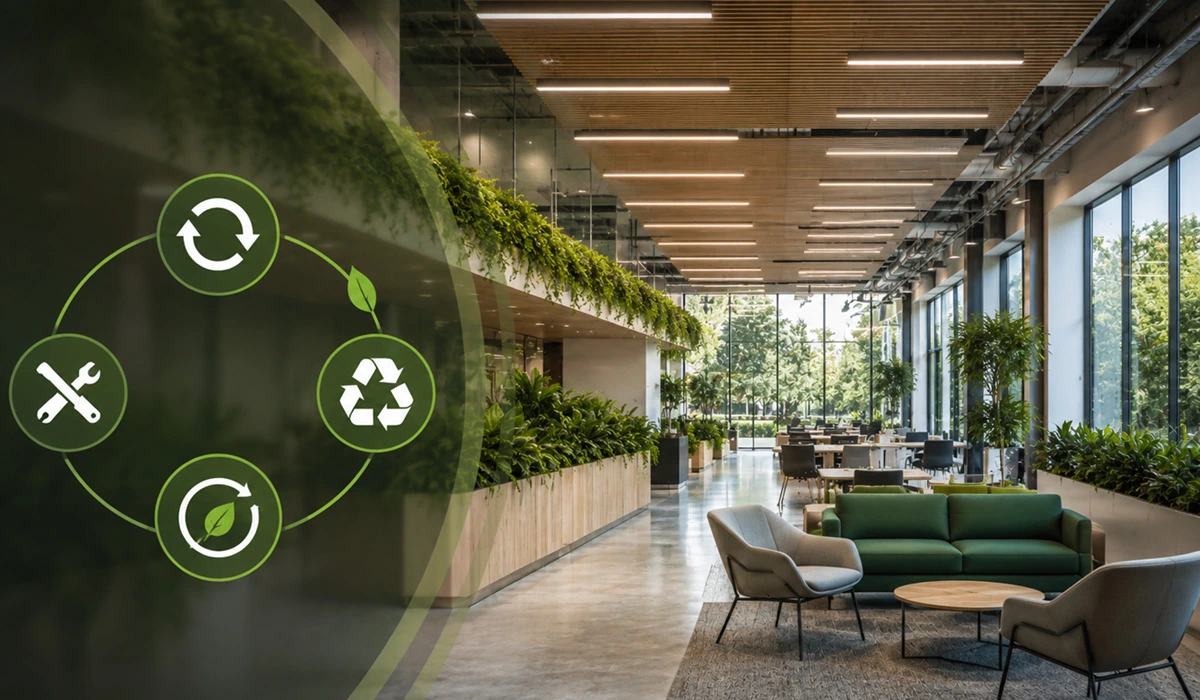
Commercial buildings face growing pressure to reduce waste without compromising performance or project budgets. A lighting manufacturer can help turn these pressures into practical circular solutions. Circular economy thinking changes how commercial lighting is managed. Instead of treating fittings as disposable assets, businesses can keep valuable materials in use. This can involve remanufacturing, repurposing, restoration, or upgrading existing systems with modern technology. DRK Lighting approaches these challenges through practical solutions. The aim is simple – keep products and materials useful for longer while reducing unnecessary replacement.
Circular Thinking Starts With Existing Lighting
A circular strategy should begin before complete replacement becomes the default decision. Existing fittings can contain valuable housings, components, and infrastructure suitable for further use. DRK Lighting assesses existing fittings before determining the most suitable solution. Suitable products can be reused, repaired, restored, or upgraded.
Components that cannot be reused can also become donors for other fittings. This approach prioritises prevention, reuse, repair, and recovery within the waste hierarchy. For commercial projects, waste reduction does not mean accepting outdated lighting performance. Existing fittings can be adapted to use modern LED technology and intelligent controls. This allows businesses to improve lighting performance while retaining useful parts of existing systems.
Technological Integration Can Strengthen Circular Lighting
Circular lighting needs to perform well in real commercial environments. Energy efficiency, control, reliability, and maintenance remain important after sustainability goals are established. A modern lighting manufacturer can support this transition through LED upgrades and Bluetooth lighting controls. These technologies can improve energy efficiency and make lighting management more responsive.
DRK Lighting uses Bluetooth systems to help businesses improve energy and cost efficiency. The technology can support better control without making existing fittings unnecessary waste. This creates an important balance. Circular principles preserve useful resources, while modern technology improves their performance.
Circular Lighting at Scale: The BP Sunbury Project
The BP International Centre for Business and Technology in Sunbury demonstrates how this approach can work at scale.
The site faced outdated controls, system failures, high operating costs, and a requirement to avoid full luminaire replacement. DRK Lighting upgraded more than 8,500 luminaires across the 10-building campus. Existing fittings were retained and upgraded through refurbishment and restoration techniques. Fluorescent systems were also converted using advanced LED technology.
The project introduced Bluetooth mesh controls, PIR sensors, and daylight harvesting. These systems created a more intelligent lighting environment across the buildings. The results demonstrate the commercial value of circular thinking. Annual energy use fell from 6.83 million kWh to 1.46 million kWh.
The project also delivered more than £1.5 million in annual energy savings. Avoiding complete replacement saved a further £600,000. The environmental results were equally significant. More than 8,500 luminaires were saved from landfill, with approximately 30 tonnes of hardware reused. Around 150 tonnes of manufacturing-related CO₂ were avoided. The project also achieved more than 1,000 tonnes of annual CO₂ savings.
Waste Reduction Can Extend Beyond Lighting
Circular economy thinking can also influence wider commercial fit-outs. DRK Lighting’s LAAS Waste Reduction Scheme focuses on reducing CAT-A and CAT-B waste. The scheme includes rebates for CAT-A removal. It also provides opportunities to repurpose CAT-A materials for other sites. This demonstrates how lighting projects can connect with broader resource management strategies. A circular approach considers what happens to materials throughout the project lifecycle. That wider perspective can help businesses make better use of existing resources. It can also reduce avoidable waste during commercial refurbishment.
Building a More Practical Circular Economy
The circular economy becomes more achievable when sustainability is integrated into clear commercial decisions. Businesses need solutions that protect resources while supporting performance and project requirements. Remanufacturing, repurposing, restoration, LED upgrades, and intelligent controls offer distinct paths forward. The right combination depends on existing assets and project requirements.
The role of a lighting manufacturer is becoming broader in the modern business sphere. DRK Lighting combines commercial lighting expertise with remanufacturing, repurposing, controls, and waste reduction initiatives. For commercial spaces, this creates a practical route towards circularity. It keeps useful resources in circulation while supporting efficient and better-performing lighting environments.
