

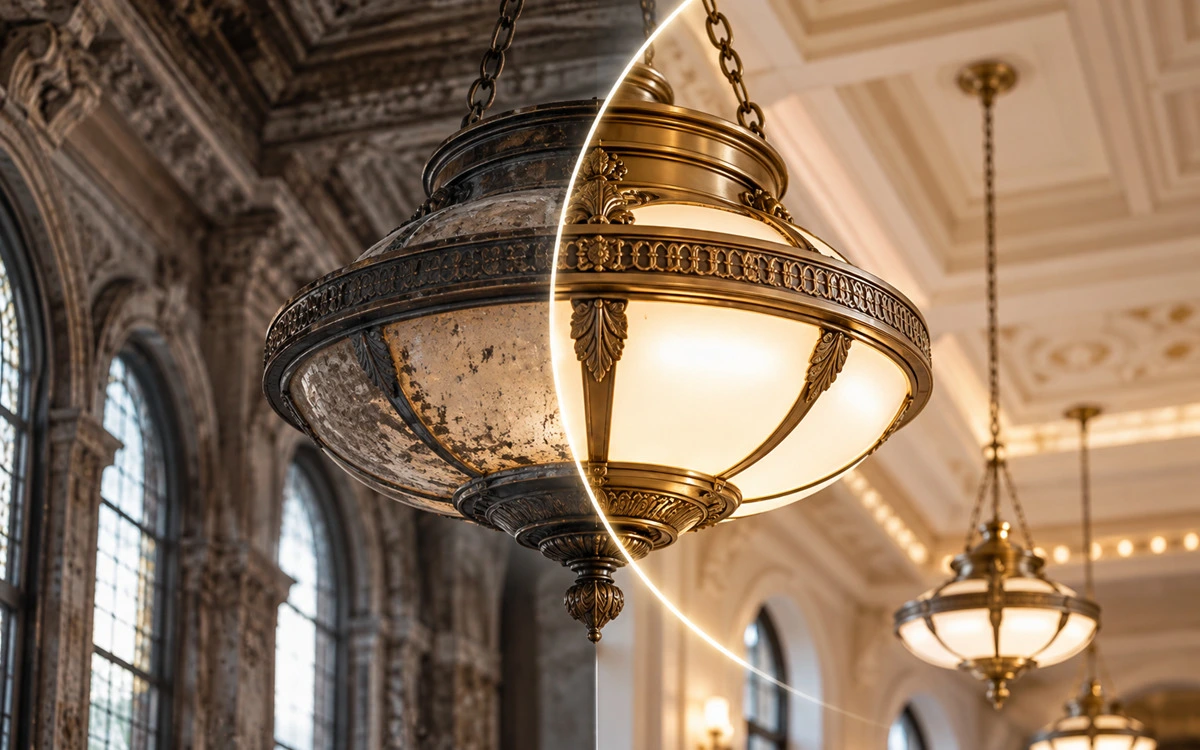
Older lighting can hold more than functional value. Its shape, finish, and construction can define a space. Lighting restoration preserves these details while improving everyday performance. The goal is not simply to make old fittings work again, it is about making suitable legacy fittings useful today. LED conversion can improve efficiency without removing the original housing and professional assessment can identify which components need attention. DRK Lighting combines restoration, remanufacturing, LED conversions, and retrofit expertise. This creates a practical route between heritage character and modern lighting performance.
Why Legacy Fittings Still Have Design Value
Older fittings can contribute significantly to a building’s visual identity. Their proportions may complement original architectural features. Their materials can also reflect the character of the surrounding space and are part of the history. Replacing them with standard products can change that relationship, whereas restoration allows designers to consider the existing fitting first. DRK assesses fittings as part of our site survey, before deciding their next stage. Some may need cleaning or repairs, whilst others may require more extensive remanufacturing or conversion. This assessment helps distinguish between salvageable and unsuitable components and supports more deliberate decisions during refurbishment projects.
LED Conversion Modernises Without Erasing Character
Efficiency does not always require a completely new luminaire. Existing housings can sometimes accommodate modern LED technology, which can preserve the fitting’s visible character while improving its light source. DRK always includes conversions within our remanufacturing. Existing products can transition to LED and other modern sources. This approach also reduces unnecessary removal of existing materials. Lighting restoration therefore offers more than visual preservation. It can connect familiar design features with contemporary lighting requirements.
Professional Restoration Goes Beyond Surface Treatment
A heritage-looking fitting still needs dependable technical performance, so professional restoration requires more than just cleaning and repainting. Existing fittings need assessment, disassembly, repair, and appropriate component selection. DRK’s remanufacturing process combines reused, repaired, and new components. Completed fittings then undergo rigorous assessment and testing. The approach follows the recognised BS 8887_220 remanufacturing standard, which covers inspection, component selection, testing, validation, and traceability. This provides a structured framework for modernising existing lighting.
Testing Helps Heritage Lighting Meet Modern Expectations
Preserving an old fitting should never mean accepting outdated performance. Technical testing helps establish whether modernised products remain suitable. DRK’s Black Box supports detailed photometric and compliance analysis and includes a high-precision goniophotometer. It also provides in-house EMC testing within a controlled environment. These capabilities support accurate lighting data and product verification. The White Cube supports the physical remanufacturing process. Together, these facilities connect restoration with measurable technical performance.
Timber Square Shows How Existing Lighting Can Be Preserved
Timber Square shows how this approach works in practice. The 370,000-square-foot redevelopment retained a 1950s printworks. The project preserved around 80% of the existing building and aimed to incorporate as much existing lighting as possible. DRK remanufactured pendants and high-bay style downlights, which supported the building’s low-carbon design objectives. DRK estimated savings of 1,663kg of CO₂ and two tonnes of greenhouse gas emissions savings. This demonstrates how existing lighting can support modern redevelopment goals.
Restoration Can Support Circular Design Decisions
The value of restoration extends beyond individual fittings. DRK follows a waste hierarchy across our remanufacturing work. Reuse takes priority wherever existing products remain suitable. Repair follows when direct reuse is not practical. Components can then be recovered for other fittings. This approach keeps useful materials within the lighting system and reduces the need for unnecessary replacement. Repurposing provides another route for materials that would otherwise be discarded. For previous projects, DRK has turned copper piping, air-conditioning ducts and handrails, into lighting. These materials can become distinctive lighting elements with renewed purpose.
Preserving Heritage While Moving Lighting Forward
Lighting restoration can create a useful middle ground between preservation and replacement. Existing character can remain part of the finished environment. Modern LED technology can improve efficiency and performance. Professional testing can provide greater confidence in the upgraded fitting. The strongest approach is to assess before replacing and understand your options. Suitable fittings can then receive the right level of intervention. That might mean repair, conversion, remanufacturing, or careful restoration. This balance allows heritage features to remain relevant within modern commercial spaces and give them a new lease of life.
