

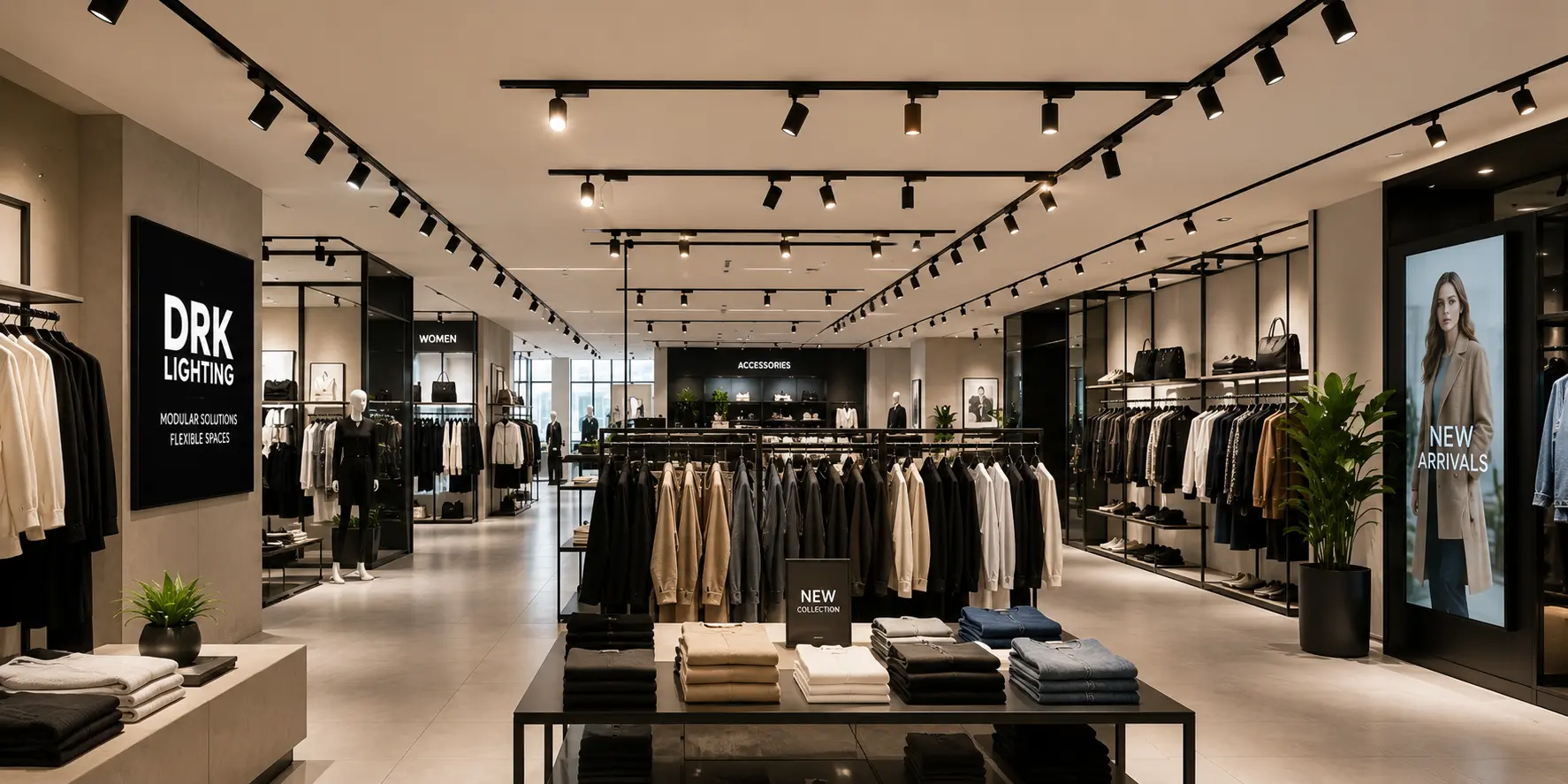
Retail stores regularly change layouts to improve customer movement and product visibility. Seasonal campaigns, promotional displays, and new product launches often require changes across the store. Traditional lighting systems can make these changes expensive. Because even small updates may require complete fixture replacement. Modular lighting provides a more flexible solution. This allows businesses to adjust or upgrade individual components instead of replacing the full system. Modular systems are designed with independent replaceable components. If one section requires adjustment, we can modify that part without affecting the complete installation. This creates a more adaptable lighting setup for modern retail environments.
Supporting Frequent Store Changes
Retail businesses rarely keep the same layout throughout the year. Fashion retailers regularly redesign window displays and supermarkets frequently reorganise promotional aisles and featured product sections. Traditional fixtures often create limitations because they operate as single units. Even small layout changes can involve additional installation work and higher labour costs. This is addressed through modular systems. This allows lighting sections to be repositioned or upgraded independently. When a retail chain updates display areas across multiple stores, lighting positions and brightness levels may also need to be adjusted. Instead of replacing complete fixtures, businesses can modify individual components within the existing system. This reduces disruption while improving flexibility across different locations.
Lower Maintenance and Energy Costs
Retail stores often operate for long hours every day, making lighting efficiency extremely important. Frequent failures increase maintenance costs and can affect customer experience inside the store. Modular lighting helps reduce these issues because only the faulty component needs replacement. The remaining fixture continues operating normally. This improves maintenance efficiency and reduces unnecessary waste. DRK Lighting also integrates LED technology into modular systems. Our approach to modular lighting means LED systems use up to 80% less energy compared to older lighting technologies. With this, retailers reduce electricity costs, especially across large commercial spaces with continuous lighting use. Another important advantage is lower heat generation. Traditional systems often release excess heat that increases pressure on cooling systems. LED-based modular systems generate less heat, helping stores improve overall operational efficiency.
Supporting Sustainability in Retail Interiors
Retail businesses are increasingly expected to reduce waste and improve sustainability practices. Full fixture replacement often leads to unnecessary disposal, especially when most of the system remains usable. DRK supports a more sustainable approach. It works through systems designed for easy disassembly, refurbishment, and reuse. Components can be repaired or upgraded individually instead of discarding the complete fixture. Modular lighting supports circular economy principles. The process works by extending the lifespan of lighting systems. Fewer fixtures are discarded, and businesses reduce their environmental impact linked to manufacturing and transport. Digital Product Passports further support this process. The digital records track product materials, repair instructions, and recycling guidance. Since modular systems are easier to dismantle, future upgrades become easier to manage.
Adaptable Lighting for Retail Environments
Retail environments require lighting systems that can adapt quickly without increasing disruption or replacement costs. Modular lighting supports this by allowing businesses to reposition, upgrade, and maintain systems more efficiently as store layouts continue to change. At DRK Lighting, this approach combines replaceable components, LED integration, smart controls, and systems designed for refurbishment and reuse. For retailers managing changing commercial interiors, adaptable lighting systems are becoming a more practical solution than repeated full-fixture replacements.
