

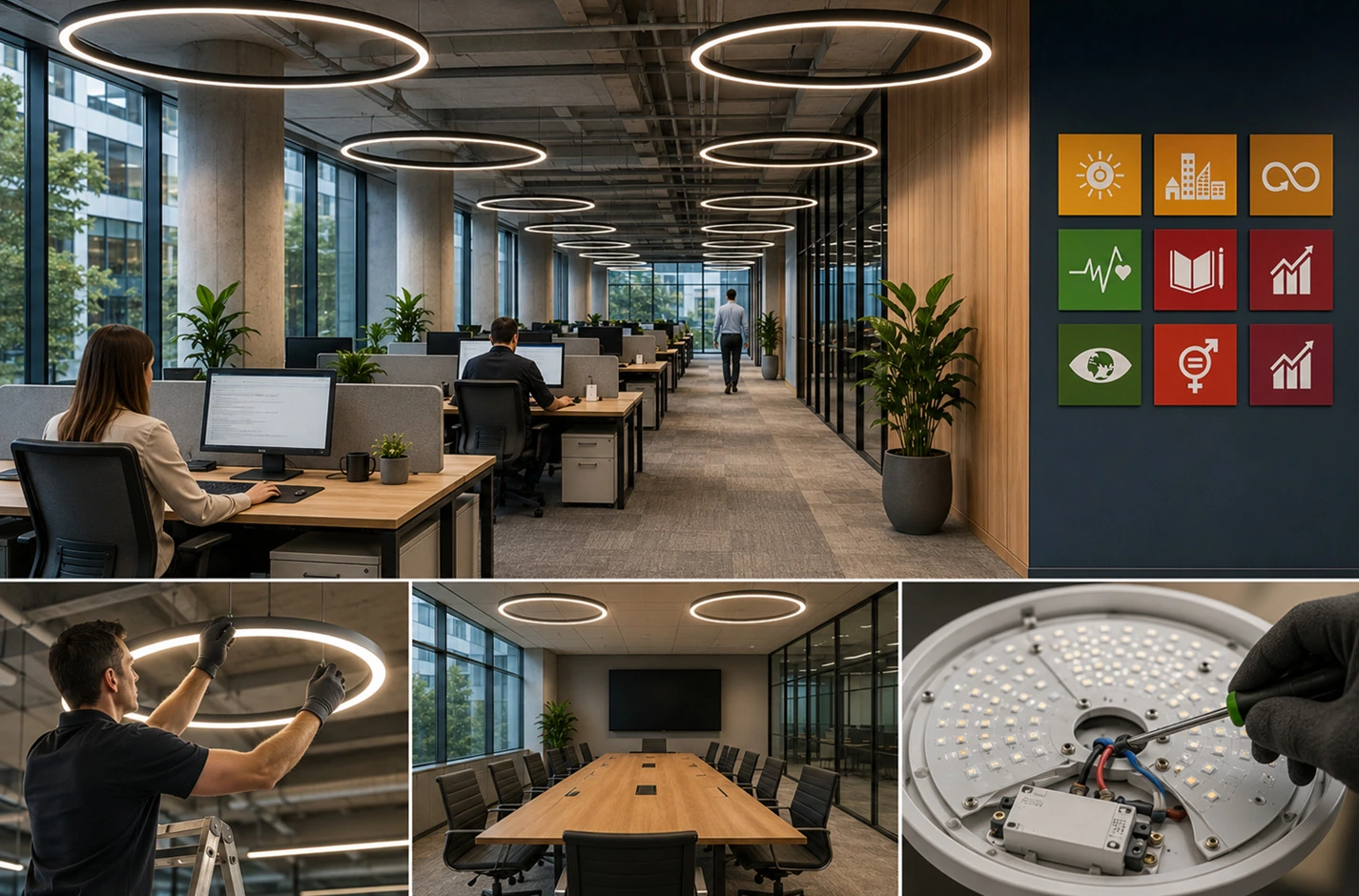
Commercial property upgrades often begin with one goal: improving performance without increasing long-term costs. Lighting plays a major role in achieving that balance, yet many businesses still replace complete systems whenever upgrades are required. That decision can increase maintenance costs, create unnecessary waste, and make future refurbishments more expensive. Circular lighting offers a different approach. Instead of replacing everything, it focuses on repairing, upgrading, remanufacturing, and reusing existing systems and extending their lifecycles. At DRK Lighting, this approach helps commercial properties improve efficiency while protecting long-term investment. Return on investment is not limited to energy savings alone. It also comes from lower maintenance, flexible upgrades, reduced waste, and lighting systems built to last. Looking beyond the purchase price often reveals where the real value lies.
Lower Operating Costs Over the Building’s Lifetime
Many businesses evaluate lighting based on installation costs alone. The largest expenses, however, often appear after installation through electricity use, maintenance, and future replacements. DRK Lighting recommends upgrading existing systems with LED technology as part of a circular approach. LED lighting consumes less energy and lasts longer than traditional lighting technologies. This reduces electricity use while lowering replacement and maintenance requirements over time. Long-term ROI grows through multiple small savings rather than just one large saving. Lower energy bills combined with fewer maintenance visits create ongoing financial benefits throughout the building’s lifetime.
Flexible Systems Protect Future Investments
Commercial buildings rarely remain unchanged. Offices introduce collaborative spaces, retailers refresh store layouts, and commercial properties adapt to shifting business needs. Replacing entire lighting systems whenever layouts change unnecessarily increases project costs. Circular lighting supports modular systems where individual components can be repaired or replaced without removing the entire fitting. This allows lighting upgrades to happen gradually instead of starting fresh during every refurbishment. An office refurbishment, for example, may require brighter lighting above workstations while keeping softer lighting in breakout areas. Modular systems allow these adjustments without replacing the complete installation. That flexibility helps protect today’s investment against tomorrow’s changes.
Smart Controls Deliver Better Returns
Lighting often remains switched on in areas used only occasionally. Meeting rooms, corridors, and shared spaces may stay illuminated even when nobody is present. DRK Lighting integrates smart lighting controls, including Inventronics’ HubSense, to improve how commercial buildings manage energy. Occupancy sensors automatically adjust lighting based on actual room usage, helping reduce unnecessary electricity consumption throughout the working day. This is where circular thinking delivers additional value. Improving how lighting operates can sometimes create greater savings than replacing equipment alone. Smarter systems help maximise the performance of existing installations.
Sustainability Adds Business Value
Businesses are increasingly expected to balance commercial performance with environmental responsibility. Sustainable refurbishment is no longer viewed as a separate objective. It has become part of long-term asset management and business planning. DRK Lighting aligns its sustainability strategy with the United Nations Sustainable Development Goals (SDGs). These include affordable and clean energy, industry innovation, sustainable cities and communities, responsible consumption and production, good health and well-being, quality education, and decent work and economic growth. These priorities encourage reduced waste alongside better use of existing resources. Choosing reuse before replacement often delivers environmental benefits alongside measurable commercial value. In many refurbishment projects, this creates stronger long-term returns than repeatedly installing entirely new systems.
Better Workspaces Support Long-Term Performance
Return on investment is not measured through maintenance budgets alone. The quality of the workplace also influences how commercial buildings perform. Circular lighting supports healthier working environments through features such as dimmable lighting, natural light simulation, and energy-efficient LED systems. These create lighting conditions that support employee comfort while reducing unnecessary energy use. Another practical benefit lies in the ability to repair and recycle individual components. Instead of replacing complete fittings when technology changes, specific parts can be updated instead. This extends product lifecycles and reduces future refurbishment costs while supporting more sustainable commercial operations.
The Many Benefits of Circular Lighting
Commercial lighting investments should continue delivering value long after installation is complete. Circular lighting achieves this by combining LED upgrades, modular systems, smart controls, repairable components, and remanufacturing into a long-term strategy rather than a one-time project. At DRK Lighting, this approach helps reduce operating costs, improve workplace performance, and support the United Nations Sustainable Development Goals through more responsible resource use. For commercial properties planning future refurbishments, the strongest return on investment often comes from improving existing systems to work better instead of replacing them unnecessarily.
